
Supporting Children to Learn English as an Additional Language at Banana Moon
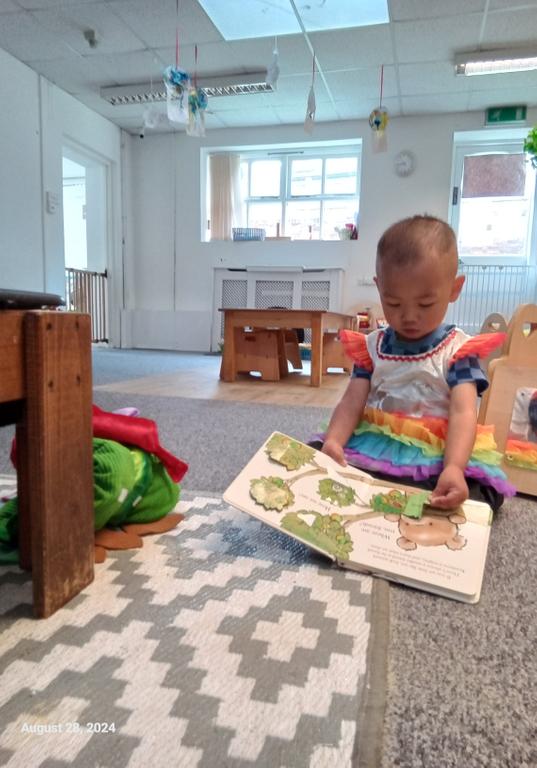
We love that so many of our children grow up speaking multiple languages! At our nursery, we
use the term English as an Additional Language (EAL) to honour the diverse languages spoken
at home. We view this variety as a huge part of our community, and give us the opportunity to be
more diverse
The Benefits of Being Multilingual
Research shows that children who speak multiple languages often have more flexible brains
that can help them develop stronger problem-solving skills, better focus, and an increased
ability to adapt to new situations. Being bilingual or multilingual is something to be proud of, and
we encourage children to use and share all of their languages with us.
Learning English at Nursery
Learning an additional language is unique to each child. Just like all areas of development, the
process isn't an exact timeline. Some children will progress quickly, while others may take
longer. By working together, we can make the process smooth, supportive, and enjoyable.
Nursery Children will go through multiple stages of learning EAL:
Preproduction (up to 6 months):
Children may stay quiet as they settle in. They may attempt to copy simple words, nod yes or
no, draw, point, or use their first language during play.
Using prompts such as “Show me...”, “Where is...?”, or “Who has...?” supports them massively
at this stage.
Early Production (6–12 months):
Children may start to use one- or two-word responses and familiar phrases. Visual cues and
simple questions, such as “yes or no”, help build confidence.
Speech Emergence (1–3 years):
Children start using simple sentences and show good understanding. They may make grammar
or pronunciation errors and might not yet understand jokes.
Prompts like “Why...?”, “How...?”, and “Explain...” encourage them to expand their language.
Intermediate Fluency (up to 5 years):
Children are able to express themselves with more clarity and confidence. They may still make
small errors, but can share ideas and ask questions such as “What would happen if...?”
How Families Can Help at Home
Speak your heart: Speak with your child in your native language to give them the best possible
start.
Learn through play: Use both languages during playtime to help them feel confident in both.
Watch & Learn: Enjoy educational shows together, like those on CBeebies.
Stay in touch: Tell us all about your child’s milestones and what they enjoy at home.
Share your world: We love celebrating your family’s unique culture and special traditions with
you!
Working Together
We believe that children excel when nurseries and families work in partnership. Together, we
can ensure every child feels safe, supported, and confident as they learn English while
maintaining pride in their first language. Parents are also welcome to learn alongside their
children—building skills that can be useful at home, in the community, and in everyday life.
If you would like more ideas, resources, or support, don't be afraid to reach out to us at either
info@bananamoon-colchester.co.uk or 01206549946. We are here to work with you at every step of
your child’s language journey.
@BananaMoon - 7 months ago

Get in touch today
We are confident you will appreciate our nursery, its setting and facilities. Should you wish to visit, we are available at any time to meet with you. Any comments or input from parents are always welcome.
Opening Times
We are open 7:30am - 6:30pm
Colchester
Banana Moon Day Nursery, Oyster Court 1 & 2, St. Helens Lane
Colchester, Essex
CO1 1TY
info@bananamoon-colchester.co.uk